Drips Along a Screw Row
Swap the screws for oversized ones with new sealing washers.
As a Kokomo commercial metal roof repair contractor, we replace worn screws, reseal laps, and swap rusted panels on shops, plants, and warehouses.
Most Kokomo commercial metal roof repair jobs fix a handful of details on panels that still have years left. Here is how to tell.
Swap the screws for oversized ones with new sealing washers.
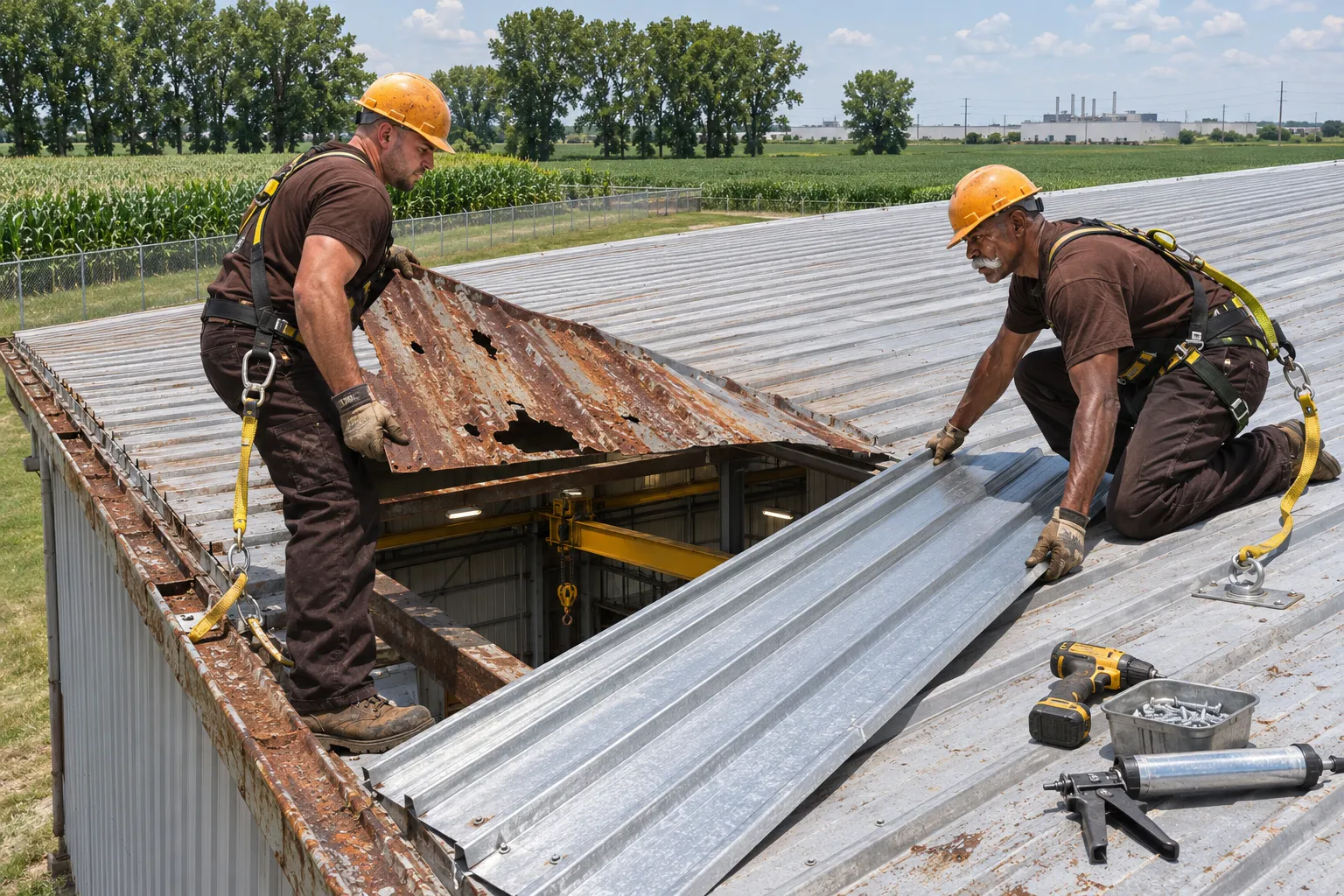
Slide a new panel of the same profile under the upslope sheet and seal the laps.
Clean the lap, replace stitch screws, and seal with butyl tape or seam tape.
Widespread rust-through and soft panels point to a new roof.
Metal roofs fail at the joints long before the panels wear out.
Thermal movement pushes screws up over the years. A raised head lets water run down the shank.
Rubber washers dry and split in sun and cold. Rust rings around the screw head show the seal is gone.
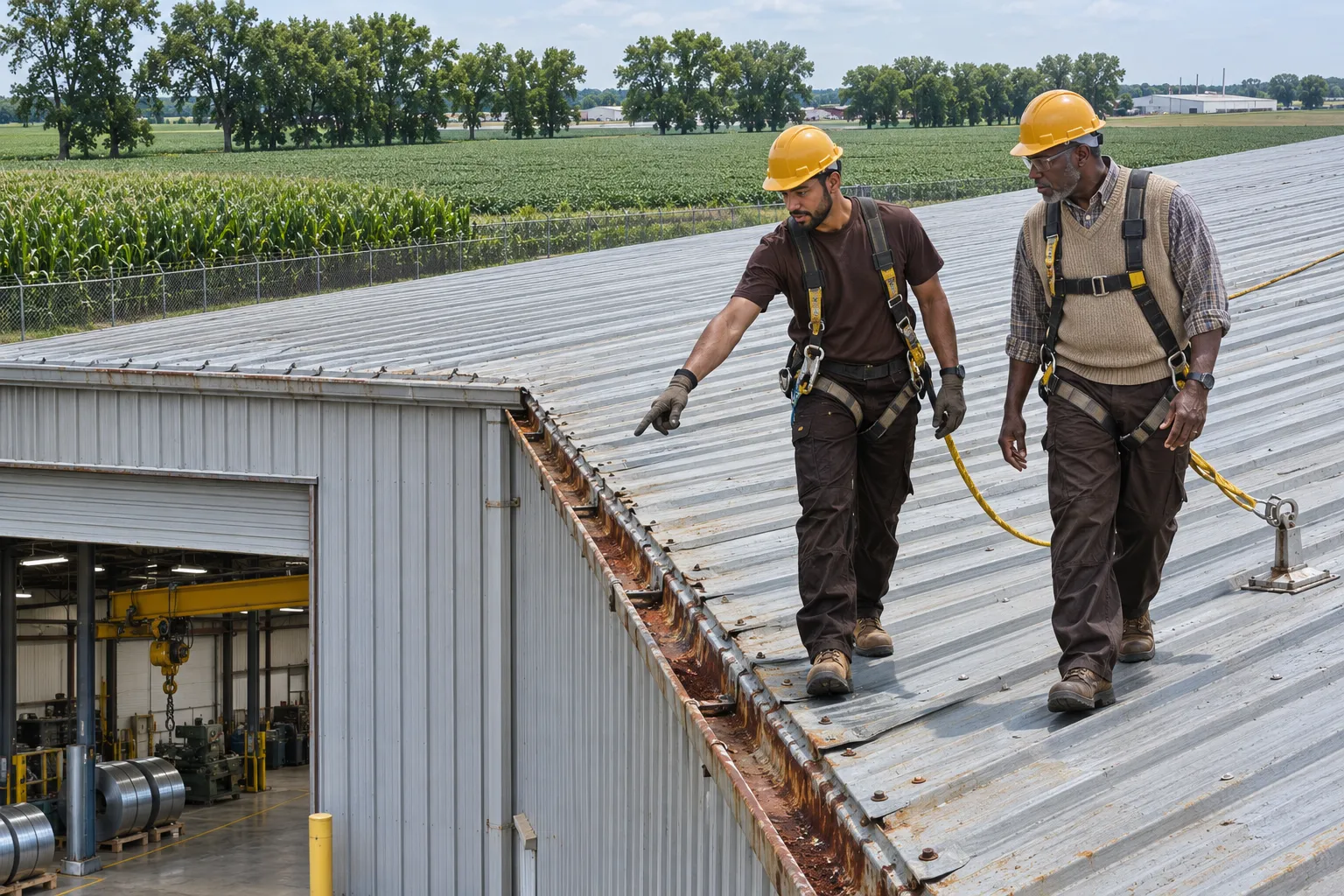
Snow and meltwater sit longest at the low edge, so rust usually starts in the bottom few feet of each panel.
Where one panel overlaps the next, failed sealant lets water creep uphill under wind pressure.
Drips forming a straight line along a purlin point to a fastener row or lap overhead.
Mill and plant roofs carry heat, vibration, and residue. Targeted repairs keep them tight.
Oversized fasteners bite fresh steel, so the loosened holes from years of vibration seal tight.
Replacing a rusted panel removes the soft steel before it spreads into the laps beside it.
Butyl tape and new stitch screws keep overlapping panels pressed together through storms.
Re-flashed skylight panels and curbs stop the drips that land on machinery below.
Each part of a metal roof has its own fix.
Pull the old screw, check the hole, and set a larger screw with a new washer. Elongated holes get a sealed metal patch.
A matching panel slides under the upslope sheet, gets fastened, and is sealed at both laps.
Opened seams are re-crimped, clips checked, and ridge and end-lap closures replaced where they failed.
Rusted gutter sections and loose eave trim get replaced so overflow stops running down the wall line.
Call and tell us which bay it falls in. The screw row or lap above it is the first place we check.
(463) 466-9764Call UsMetal roof repairs move panel by panel from the lowest eave up.
Crews walk the purlin lines and mark loose screws, cracked washers, and rust spots with paint.
Rusted areas get probed to tell surface rust from rust that has gone through the panel.
Screws are swapped, laps cleaned and sealed, and soft panels replaced with matching profile and gauge.
Skylights, curbs, and pipe boots get new flashing tied into the panel ribs.
Metal roof jobs often connect to these.
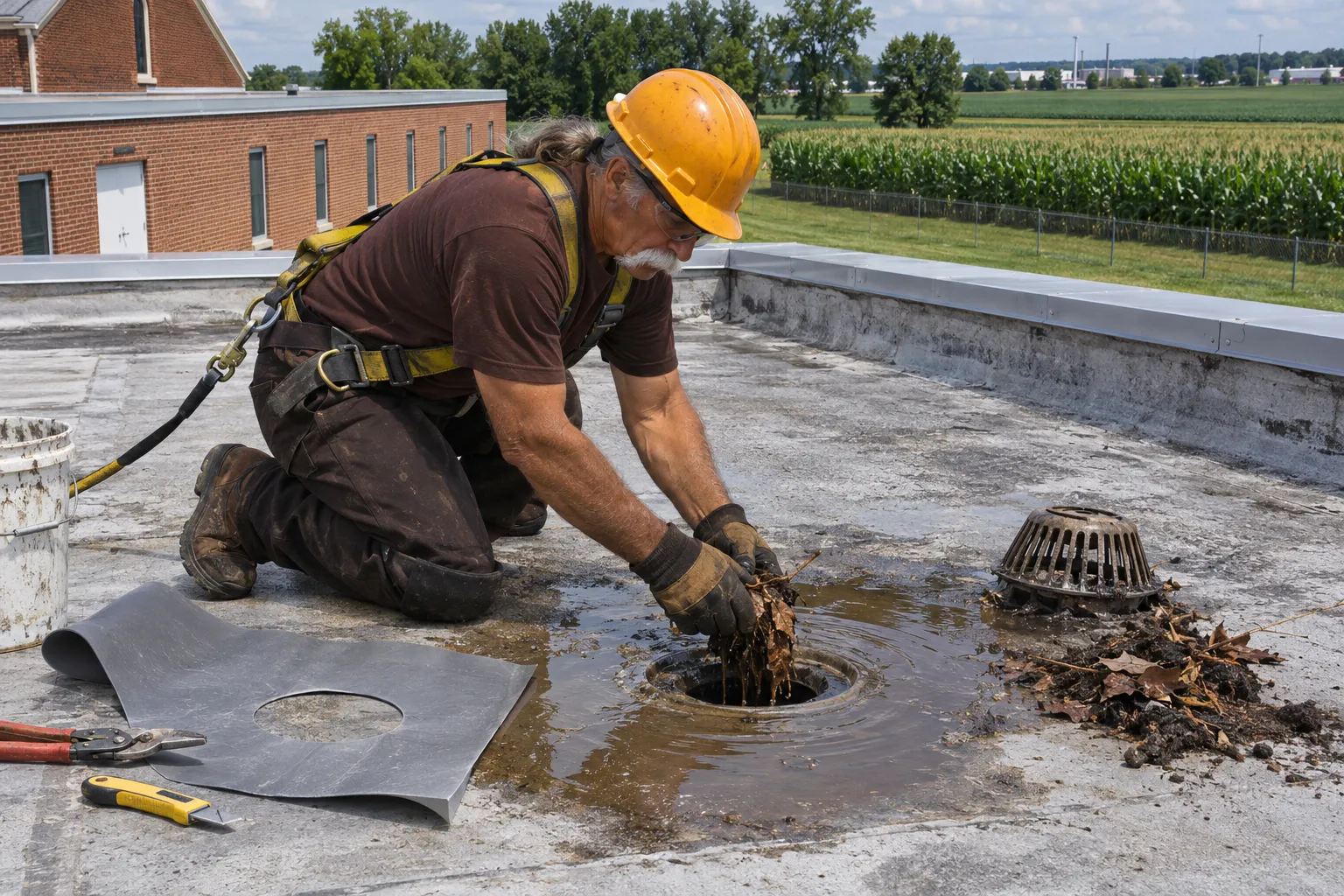
Seams, drains, blisters, and wet insulation on membrane roofs get cut out and patched with matching material.
Typical Repairs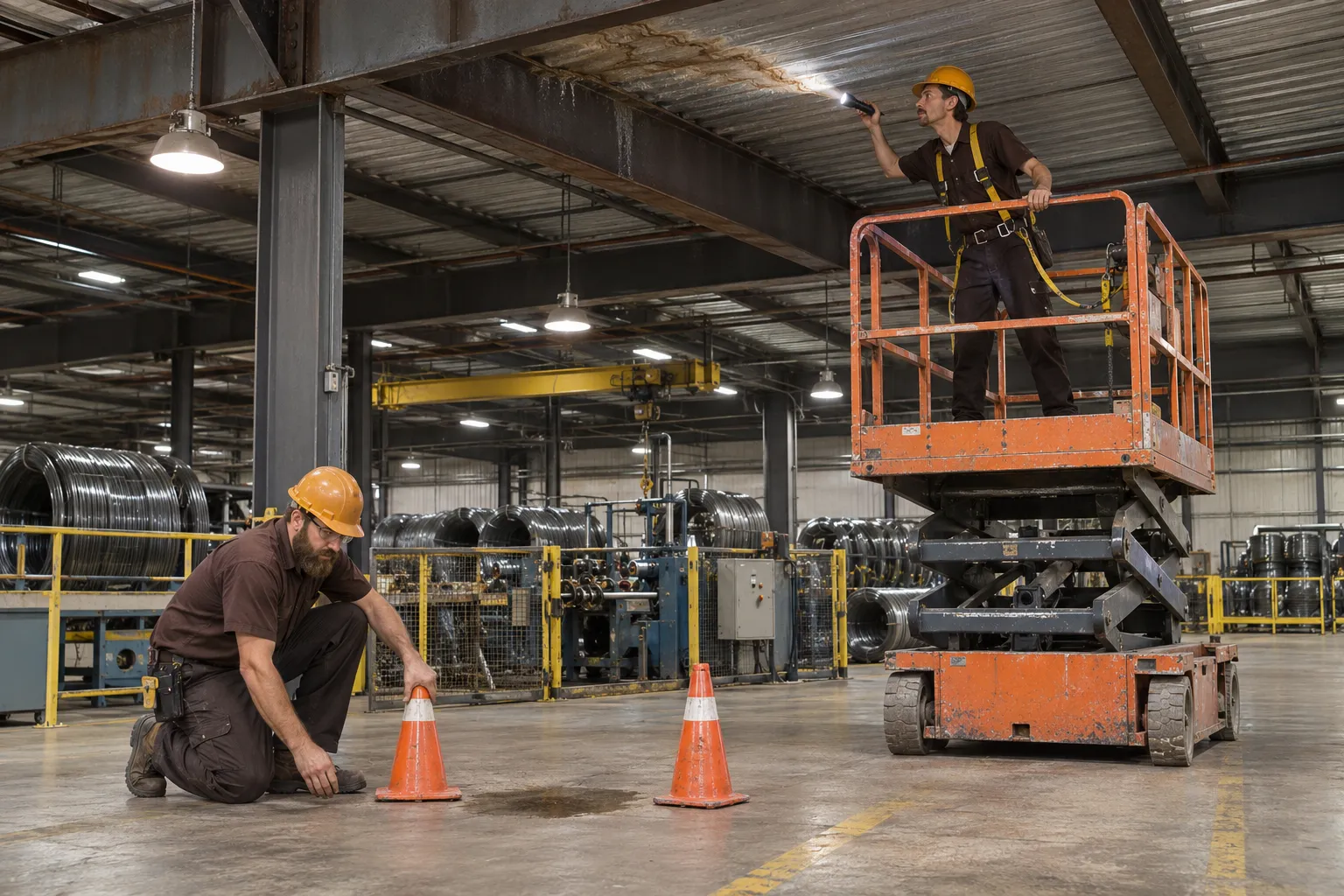
Interior stains and drips get traced to the roof opening before anything is patched.
Typical Repairs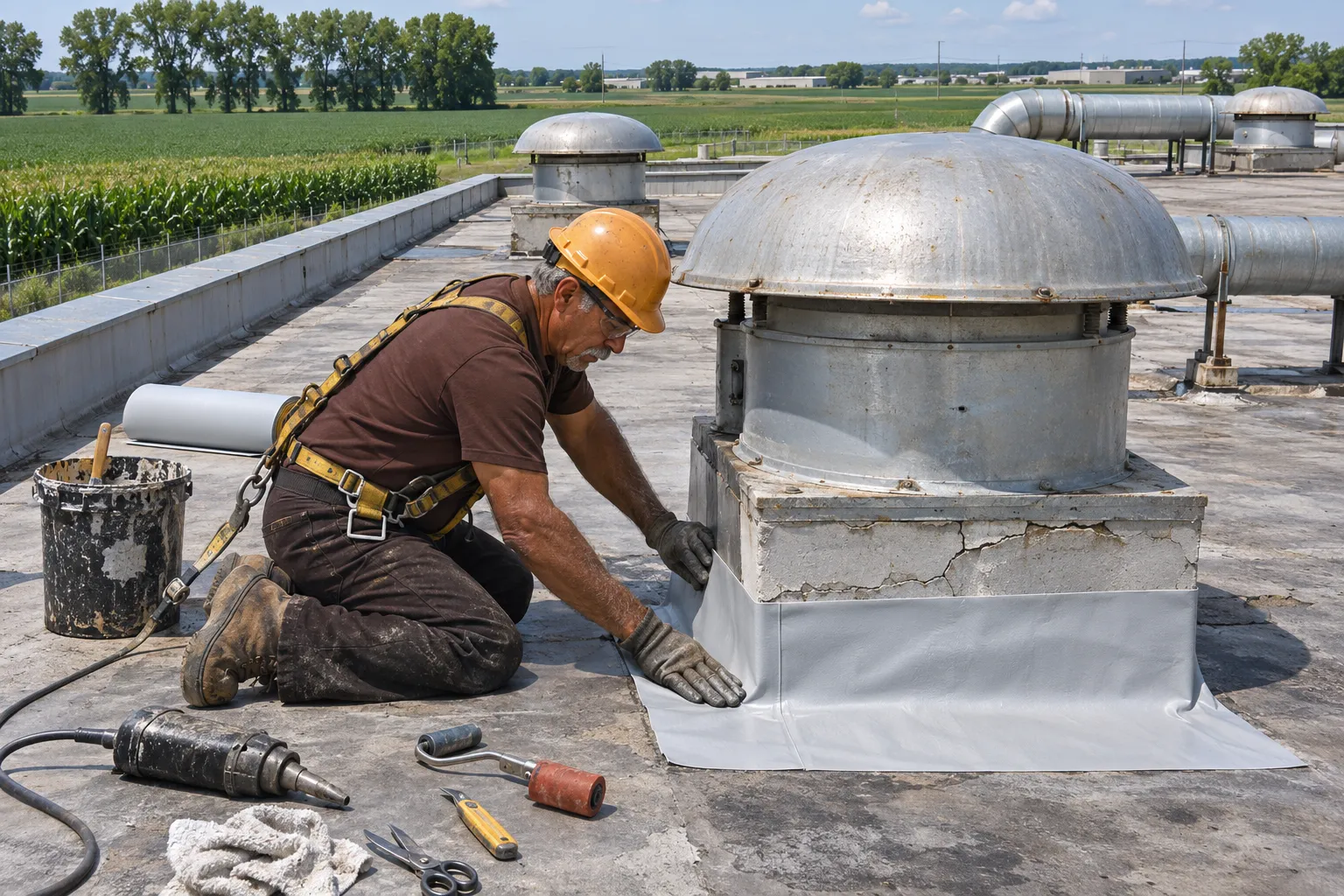
Fans, stacks, curbs, and long drain lines on plant roofs get repaired around the production schedule.
Typical RepairsCommon questions about repairing steel roofs on commercial buildings.
The rubber washers under the heads dry and crack after years of sun and cold, and thermal movement backs the screws out. New oversized screws with fresh washers fix both problems.
Surface rust can be cleaned and primed. Rust that has gone through the steel or softened the panel means the panel gets replaced.
Yes. We measure the rib spacing, height, and gauge, then order panels that lap into the existing roof.
A few panels usually go in during one visit, with the roof closed up the same day.
Often. Most leaks come from fasteners and laps, which cost far less to fix than new panels.
Yes. Opened seams are re-crimped, clips are checked, and closures at the ridge and ends are replaced.
Tell us where the drips show up under the metal roof, and we will inspect the screw rows and laps above them.