Membrane Breaking Down at Fans
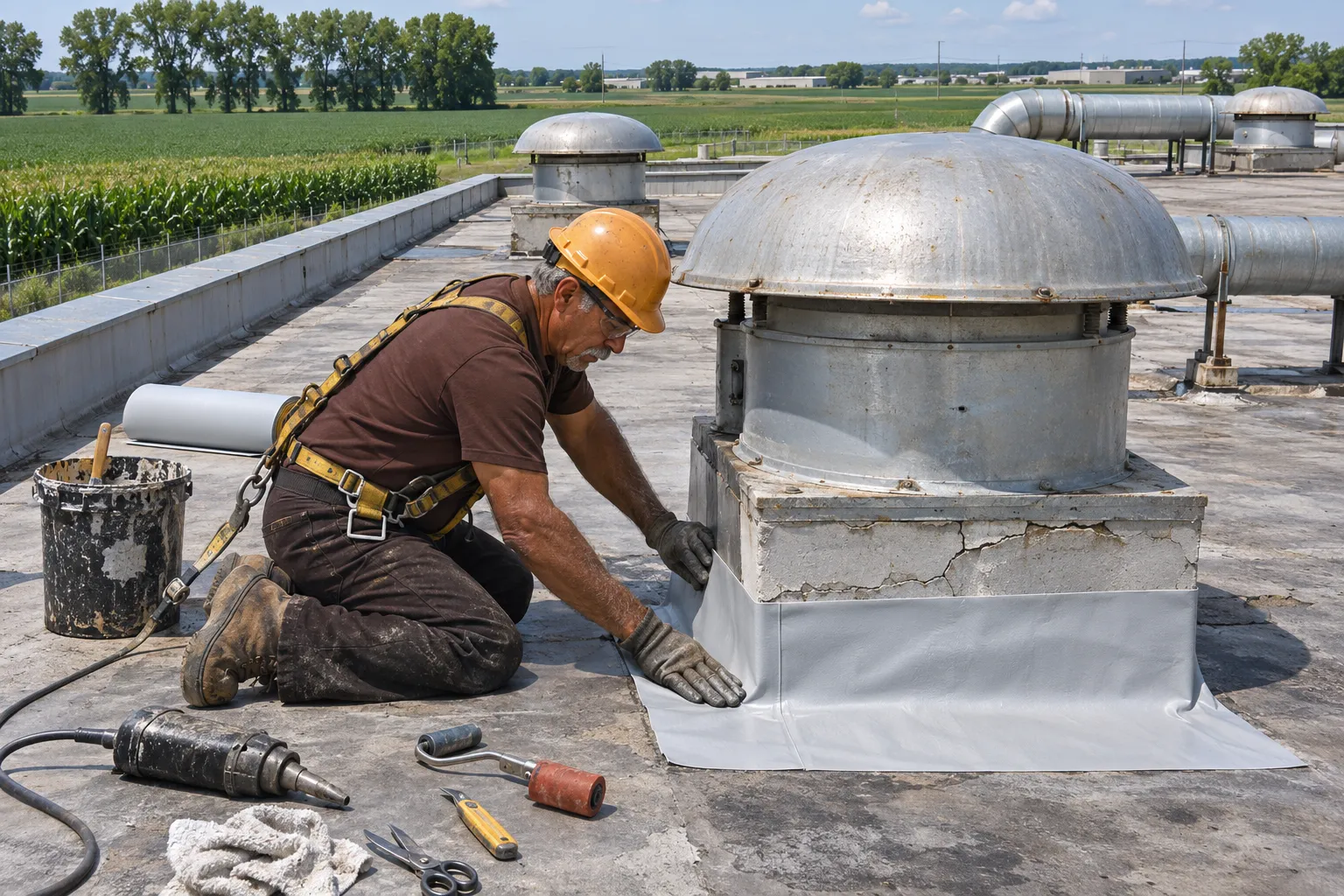
Clean off residue, replace damaged membrane, and re-flash the fan curb.
As a Kokomo industrial roof repair contractor, we fix fan curbs, stack flashing, and worn membrane on plant roofs while production keeps running below.
Kokomo industrial roof repair fits plant roofs where trouble clusters around equipment. Find your case.
Clean off residue, replace damaged membrane, and re-flash the fan curb.
Trace the opening above that line and repair it in a small, closed work area.
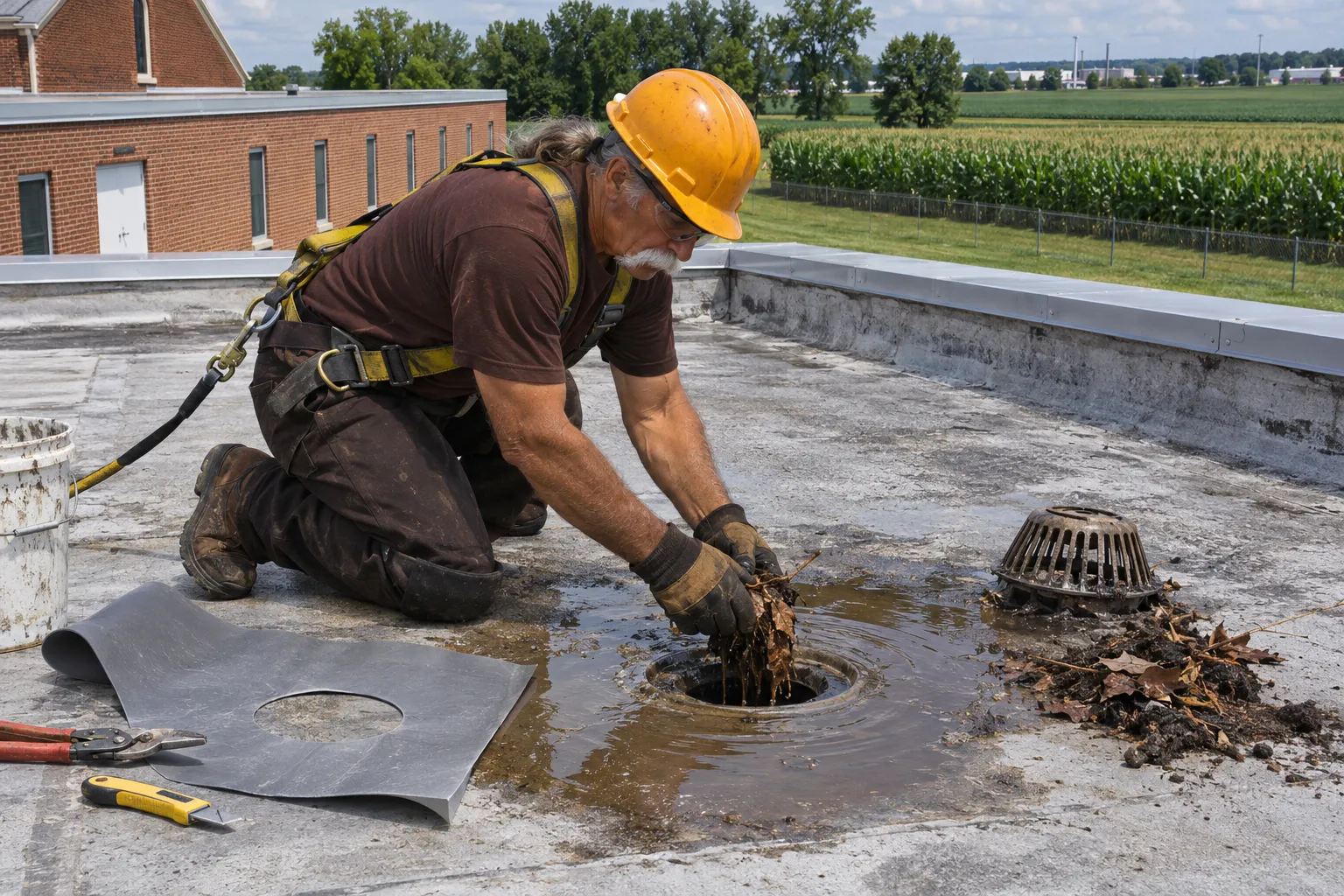
Clear drains and lines, then reset and re-flash the drain bowls.
Widespread wet cores call for a section-by-section replacement plan.
Plant roofs wear fastest where equipment and exhaust meet the membrane.
Oils and process residue soften membrane near the curb, which starts as a dark stain and ends as a split.
Flashing that sits too low lets water wash over the top during heavy rain or snowmelt.
Residue builds up in drain lines across a big roof until water backs up at the bowls.
Foot traffic from service techs scuffs and punctures membrane along the routes to units.
Drips onto lines or electrical gear need a call now and a cover over the equipment.
Plant roofs need repairs that work with the production schedule.
Small work areas over production are opened and closed each day, so lines below stay on schedule.
Torch and welding steps follow the plant permit process and get timed with the facility team.
Where fans carry oil or heat, a more resistant membrane or pad goes around the curb.
The inspection report ranks repairs so the most urgent spots get fixed first.
The repairs plant roofs need most.
Residue is cleaned off, damaged membrane replaced, the curb re-flashed to proper height, and the fan base sealed.
Boots and storm collars are replaced, and pipe supports get pads so they stop cutting the membrane.
Spring and fall visits clear drains, reseal flashings, and fix small punctures before they spread.
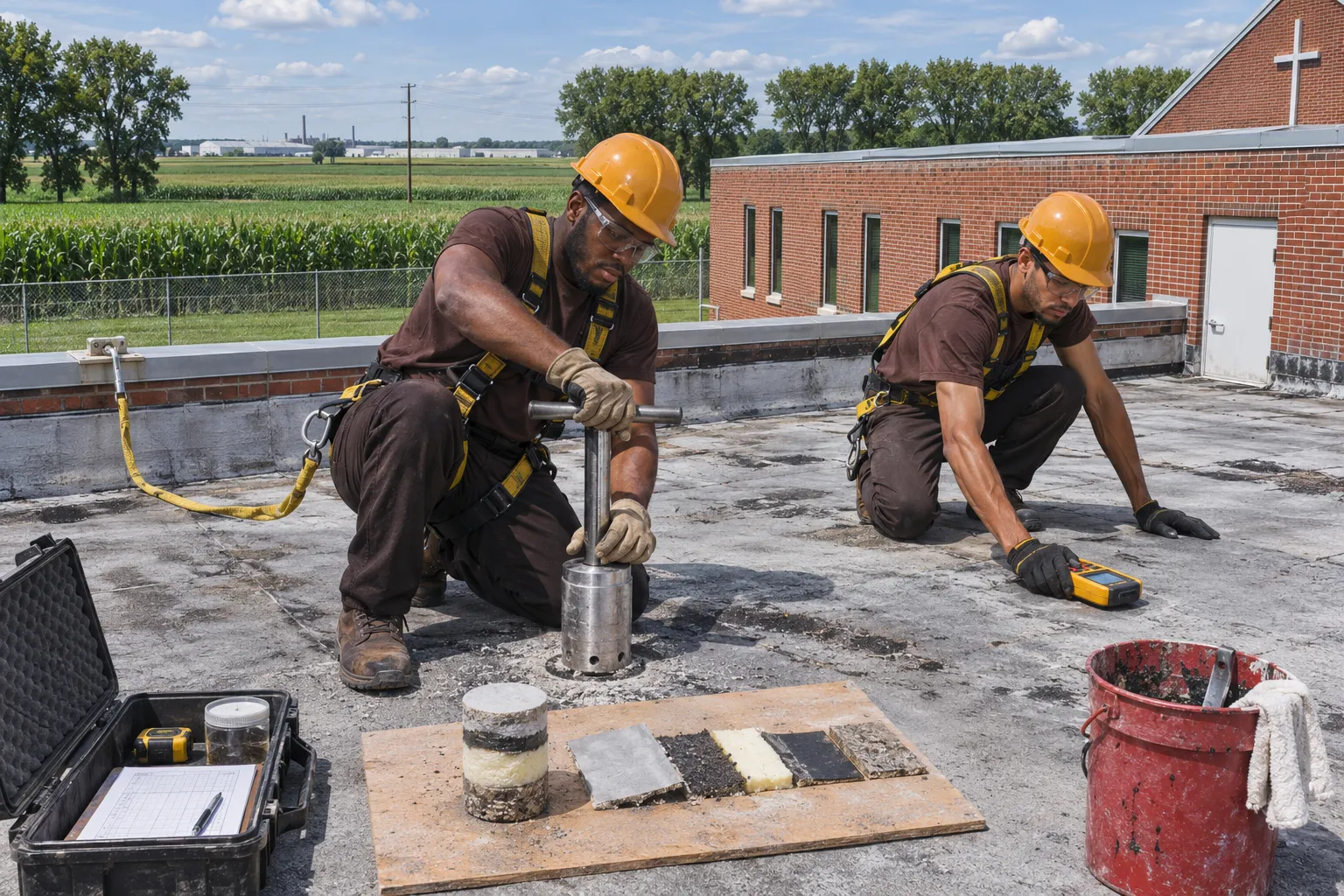
Membrane, seams, curbs, drains, edges, and supports get checked and photographed, with a ranked repair list.
Call and tell us which line and what equipment sits above it on the roof. Cover the gear and we will trace the opening.
(463) 466-9764Call UsPlant roof work gets planned with your maintenance team before anyone climbs.
We go over production hours, hot work permits, air intakes, and areas where work needs a shutdown.
The roof gets inspected and repairs ranked by how close each is to active production.
Each work area opens, gets repaired, and closes before the crew moves on.
You receive photos of every repair and a list of items to watch at the next maintenance visit.
Plant roofs often need these as well.
Seams, drains, blisters, and wet insulation on membrane roofs get cut out and patched with matching material.
Typical Repairs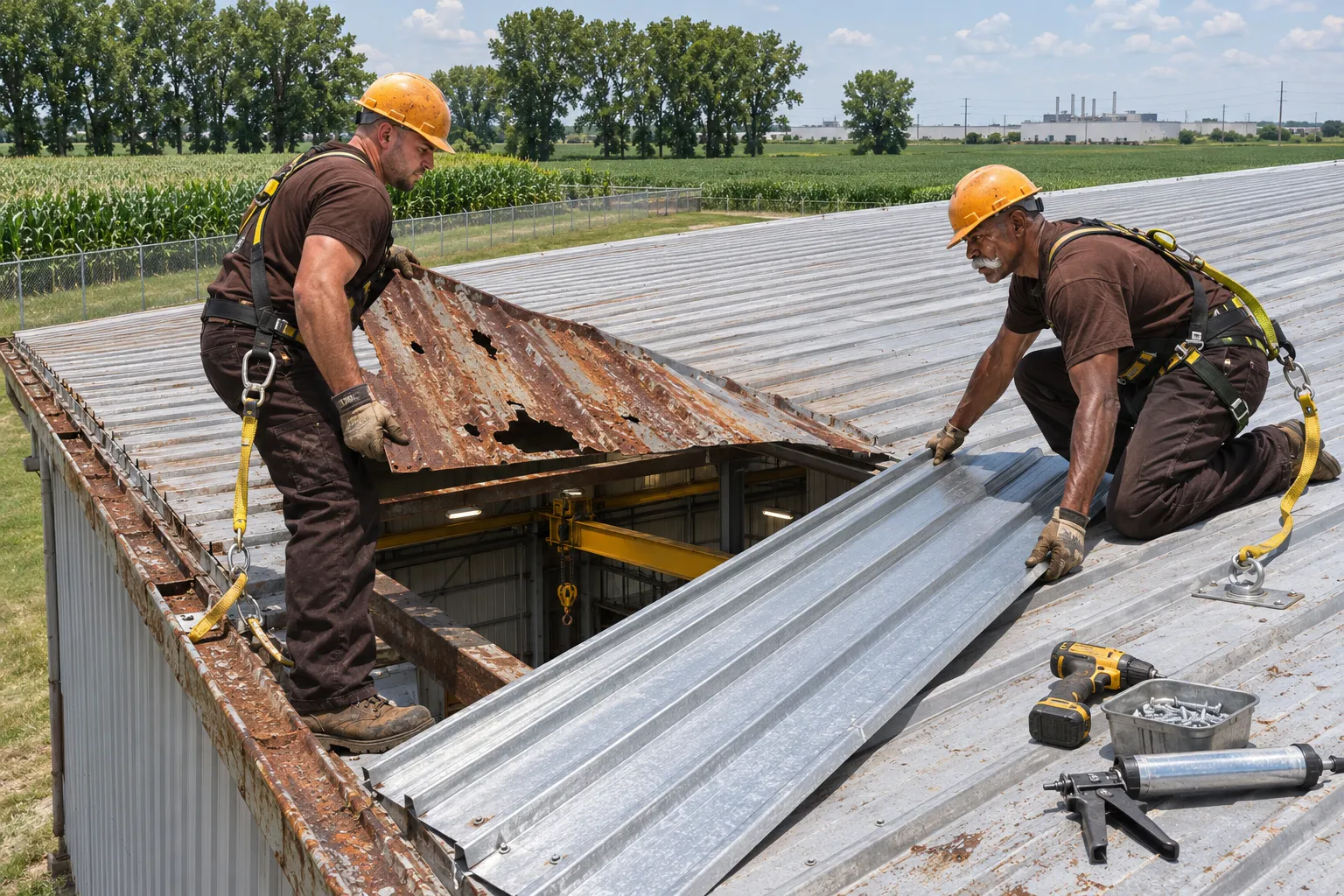
Screws, laps, rusted panels, and flashing on metal roofs get replaced or sealed one detail at a time.
Typical Repairs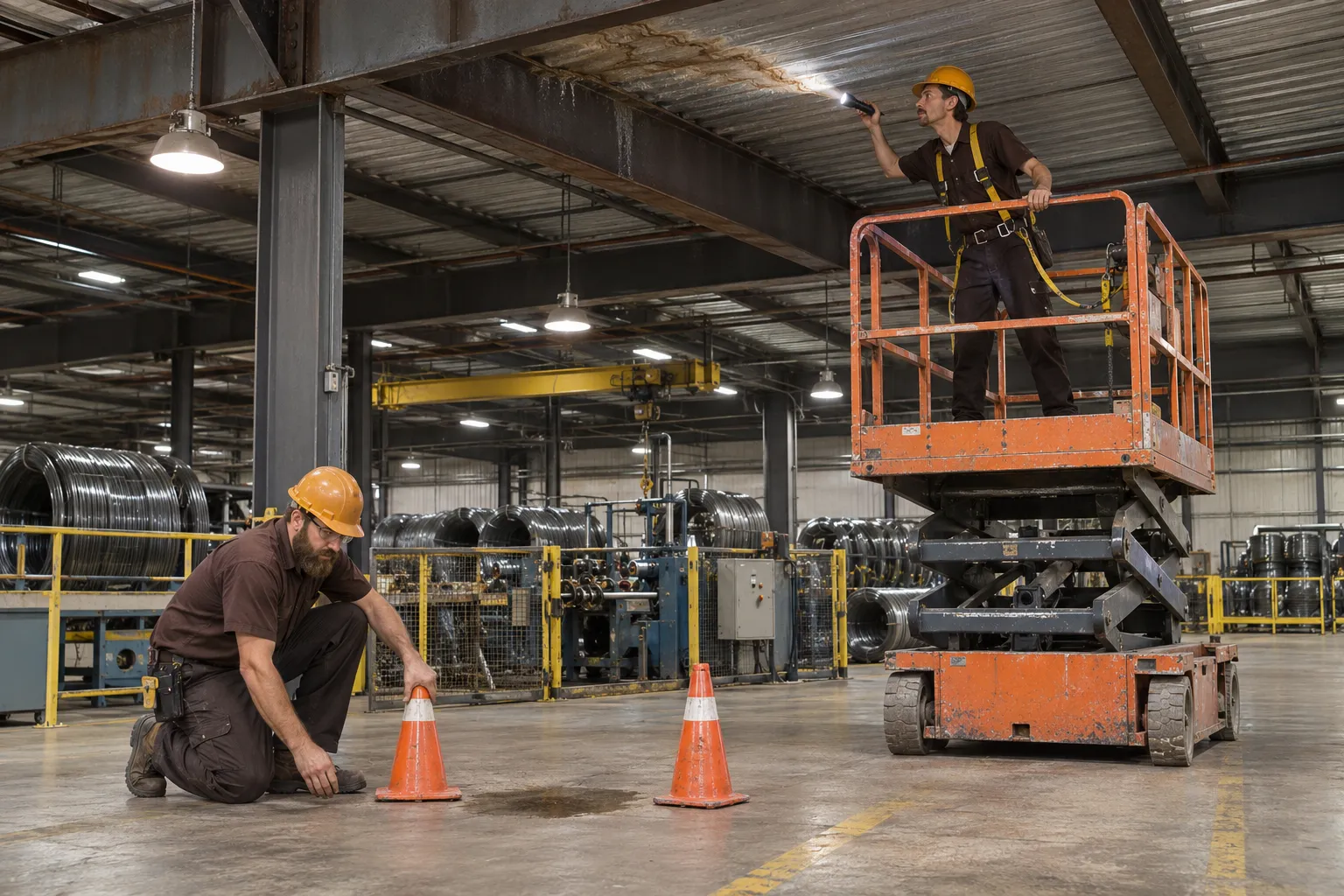
Interior stains and drips get traced to the roof opening before anything is patched.
Typical RepairsAnswers for plant managers and maintenance leads.
Roof size and type, the number of curbs and penetrations, wet insulation to replace, lift and access needs, plant safety rules, and production schedule limits. Residue exposure can call for tougher materials.
Twice a year, in spring and fall, plus a check after major storms. Plants with heavy exhaust benefit from extra looks around the fans.
Yes. Work near intakes or process exhaust is often saved for planned shutdowns, with other repairs done during normal production.
Yes. Plant check-in, hot work permits, fall protection, and any site rules the facility sets are followed on every visit.
Photos of every problem area, its location on a roof sketch, and a ranked list of repairs with what each involves.
Call to set up an inspection with your maintenance team. We will rank the repairs and plan them around production.