Drip Right Below a Rooftop Unit
Check the curb flashing, corner seams, and duct penetrations above it.

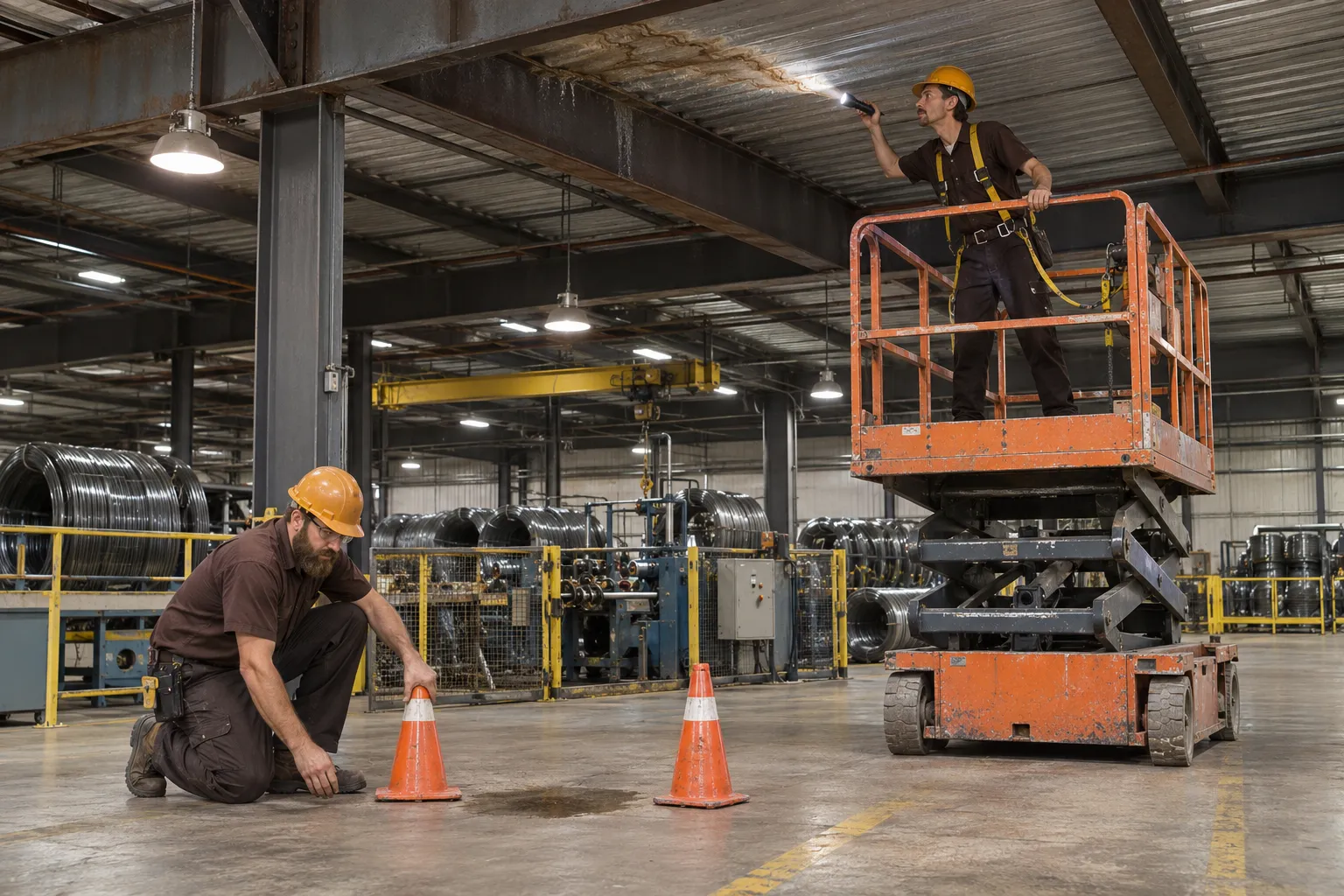
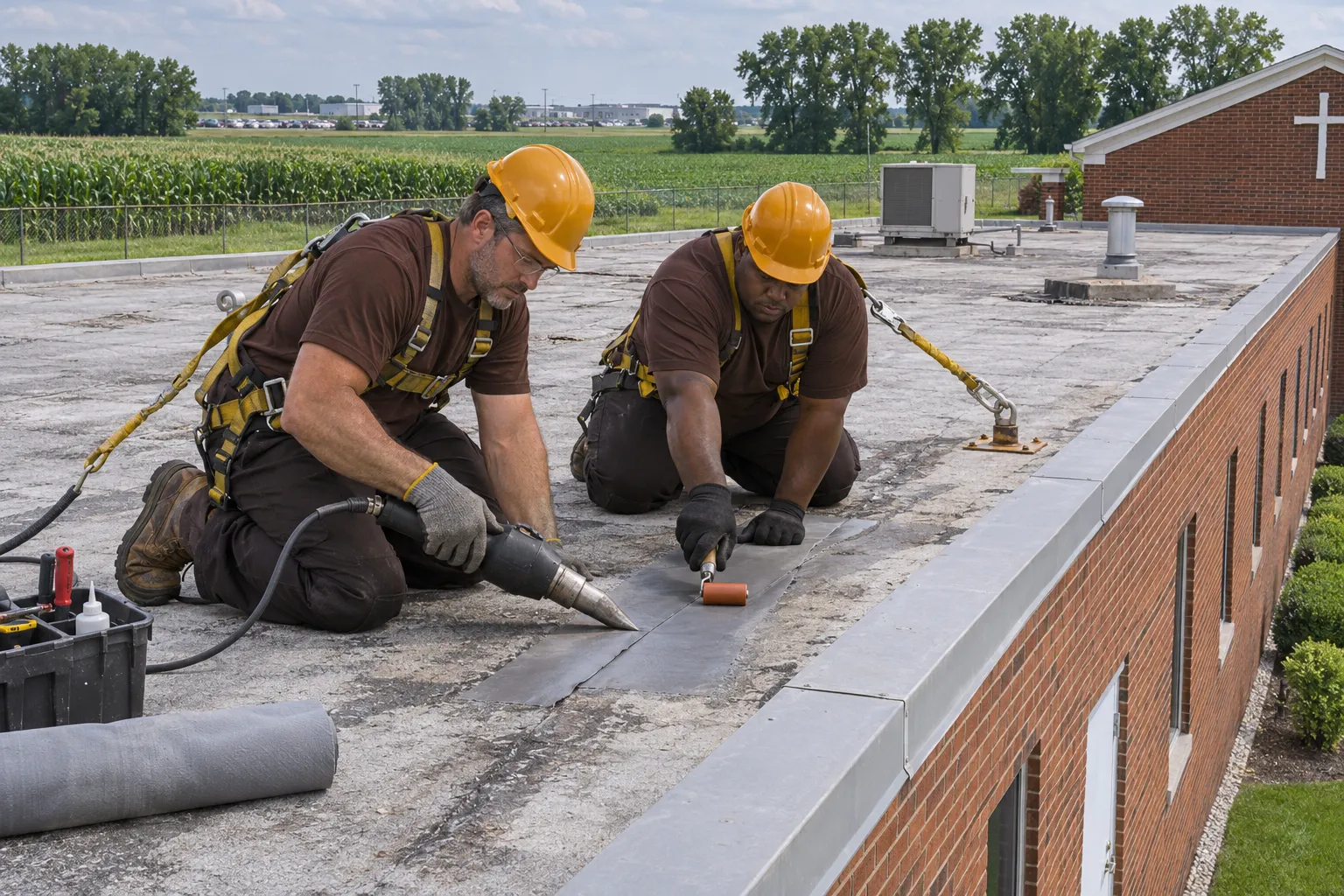
As a Kokomo commercial roof leak repair contractor, we start under the stain, follow the water up through the deck, and seal the opening we find.
Kokomo commercial roof leak repair starts by matching the inside symptom to the likely roof source.
Check the curb flashing, corner seams, and duct penetrations above it.
Look at the parapet flashing, coping joints, and edge metal on that side.
Ice at drains backs water against laps. Clear the drain and seal the seams nearby.
Several sources across a worn roof point to a bigger plan than spot repairs.
The inside of the building tells us where to look on the roof.
Active drips over stock or equipment need a call now and a tarp below until the roof is sealed.
Tiles that bow down are holding water. The deck above has been wet for a while.
Orange streaks along the steel deck show where water runs before it drips.
Water on duct runs points to the curb or penetration where the duct passes through the roof.
A leak that shows only in wind-driven rain or snowmelt narrows the search to edges, laps, or drains.
Finding the true source pays off on big roofs.
Water runs along deck flutes, so the opening is often feet away from the drip. Tracing finds it.
Sealing the source ends the cycle of patching new stains after every storm.
Photos of the source and the repair help landlords and tenants sort out who pays.
Catching a leak early keeps the wet area to a few boards near the opening.
How we find and fix the most common leak sources.
Mark the drip inside, then check seams, curbs, and drains upslope on the roof. Moisture scans and cores narrow it down.
Curb flashing is replaced, corner seams sealed, and counterflashing refastened. Walkway pads protect the path to the unit.
Wall flashing is re-terminated, coping joints sealed, and loose edge metal fastened down.
Loose clamping rings and torn flashing at the drain bowl get reset and re-flashed.
Call and describe where it is. Mark the spot inside so the trace on the roof can start right above it.
(463) 466-9764Call UsLeak tracing works from the inside out.
We note where water lands, when it shows, and what sits on the roof above it.
On the roof, every seam, curb, and drain between the drip and the high side gets checked.
Moisture scans, a flood test on a suspect detail, or cores pin down the actual opening.
The opening gets repaired with matching material, and photos show the source and the fix.
Once the source is found, one of these handles the fix.
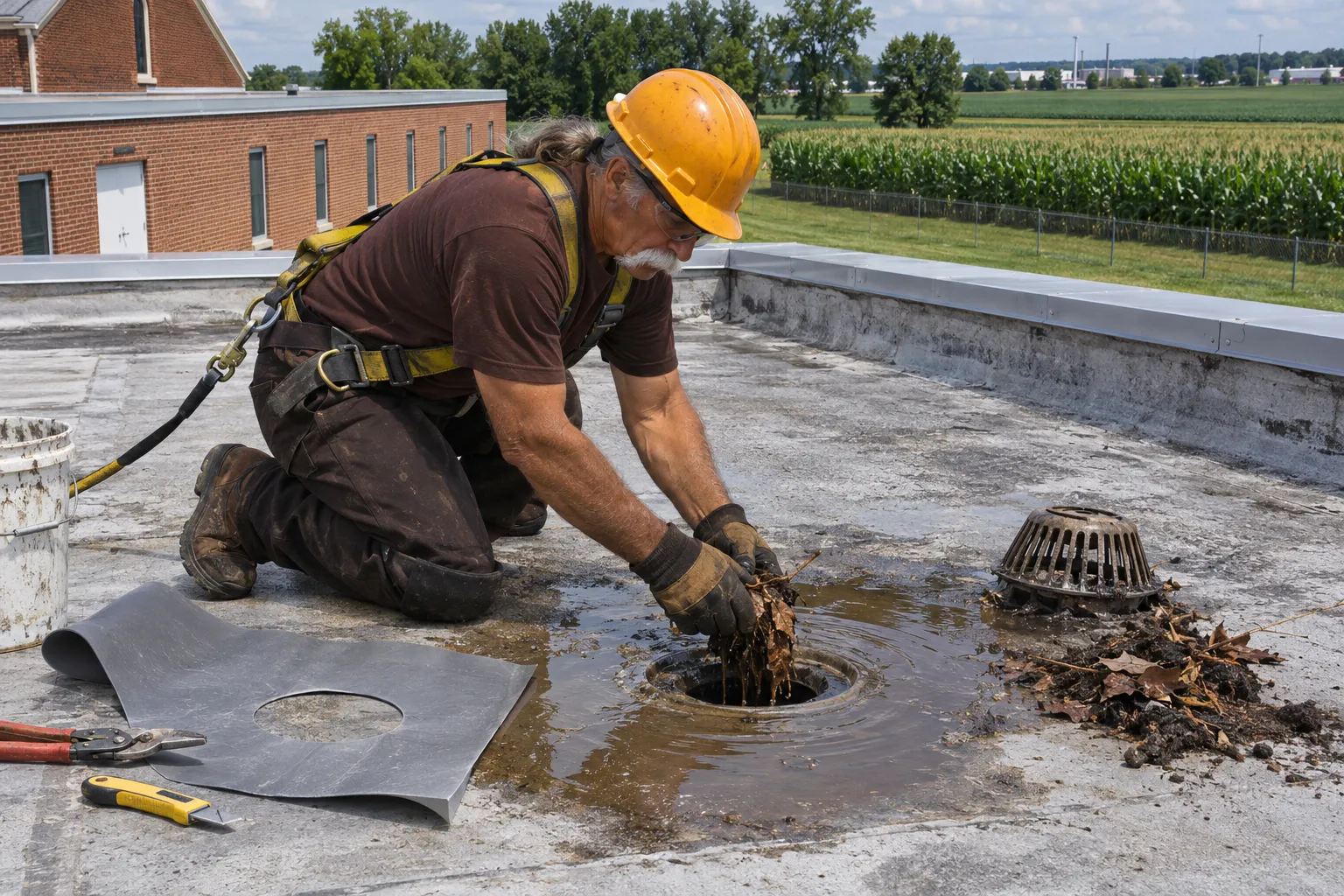
Seams, drains, blisters, and wet insulation on membrane roofs get cut out and patched with matching material.
Typical Repairs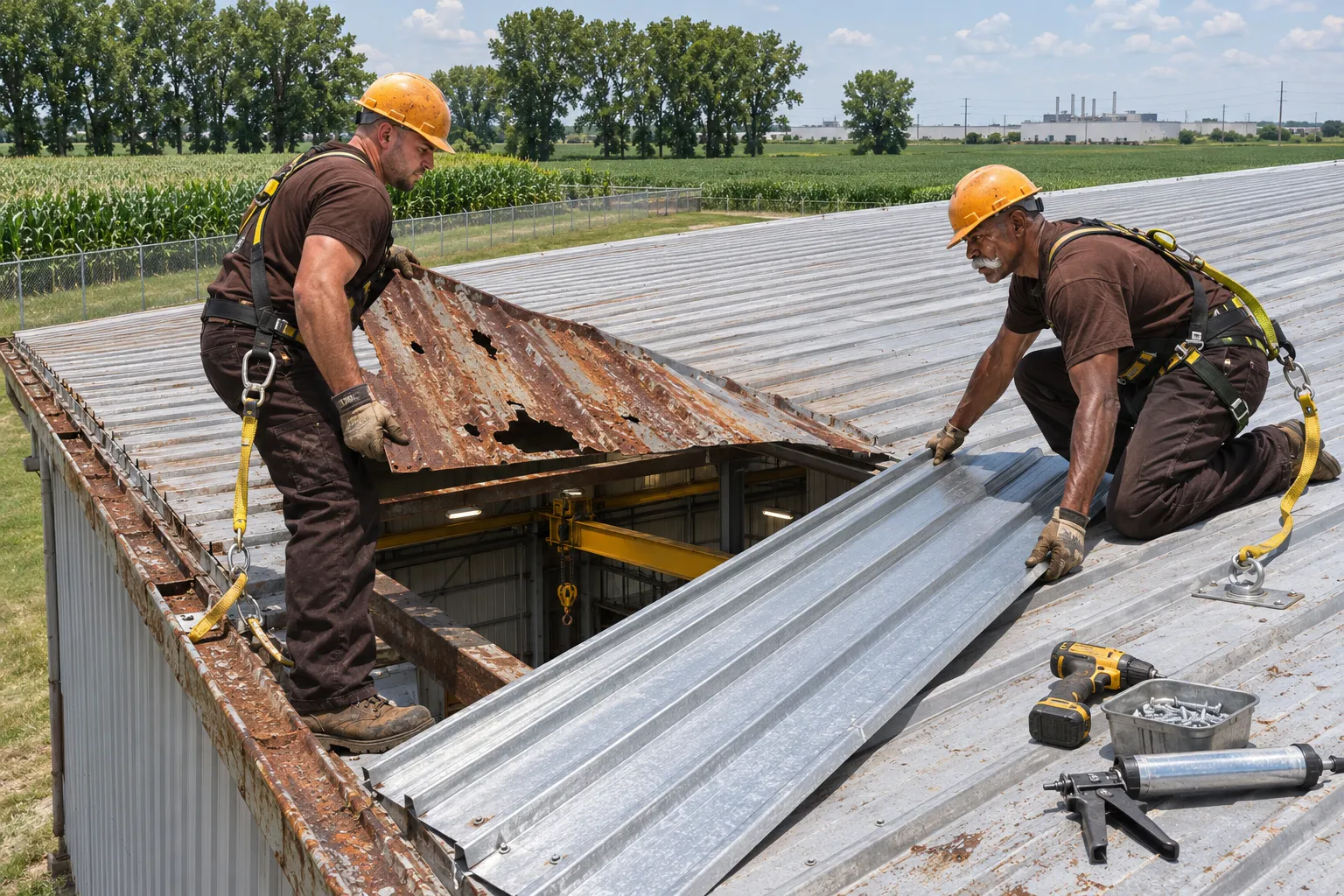
Screws, laps, rusted panels, and flashing on metal roofs get replaced or sealed one detail at a time.
Typical Repairs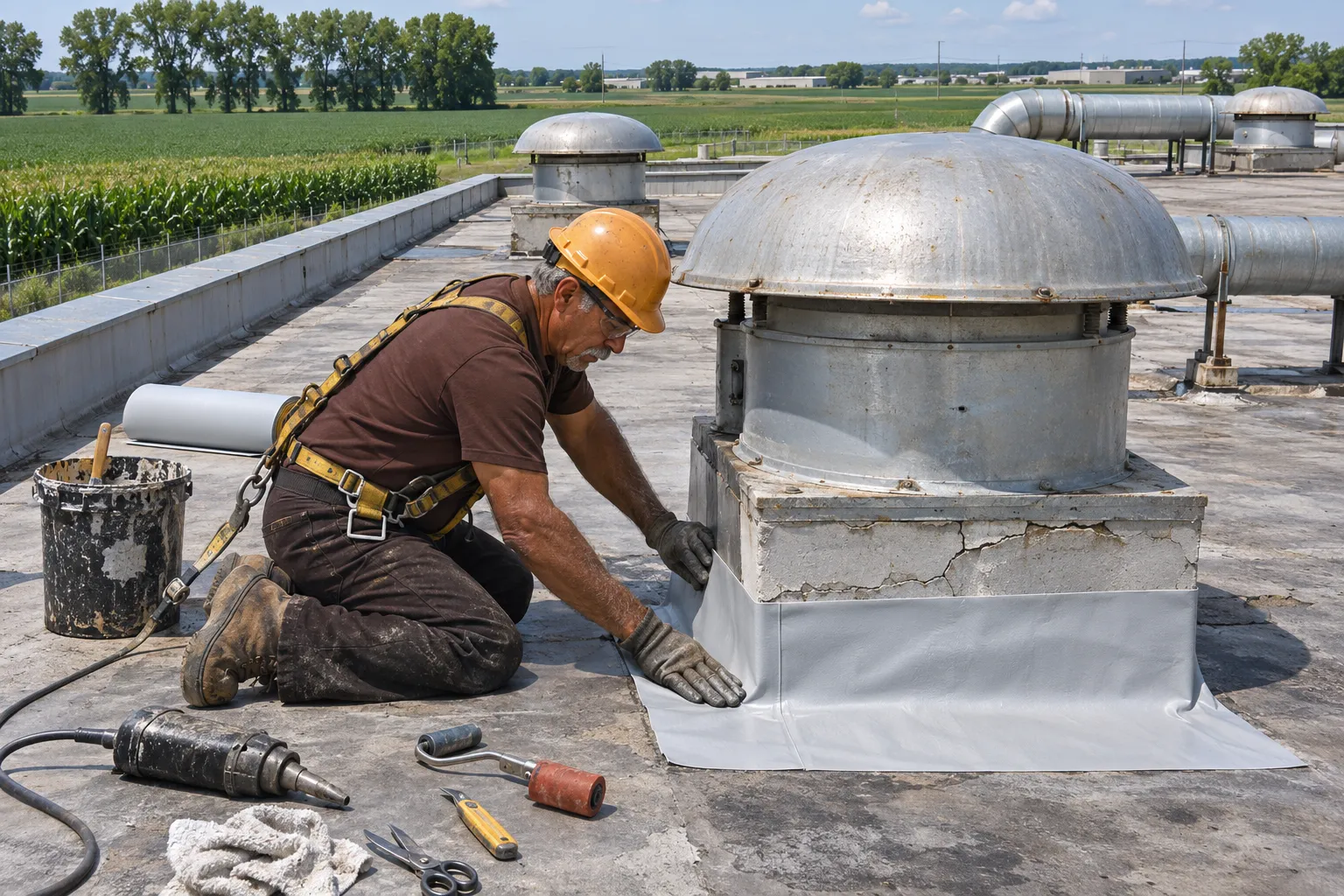
Fans, stacks, curbs, and long drain lines on plant roofs get repaired around the production schedule.
Typical RepairsWhat owners and tenants ask when water shows up inside.
How hard the leak is to find, the roof type, how much membrane, flashing, or insulation needs replacing, and access to the roof. Several leaks can be fixed in one visit. The price comes after the source is found.
Gross leases often put the roof on the landlord, and triple-net leases often pass repairs to the tenant. The lease clauses decide it; legal questions go to an attorney.
Water travels along the deck flutes and insulation joints, so a drip can shift with wind and rain direction even when the opening stays the same.
Both. Protect what is below, mark the drip location, and take a photo. That helps the roof trace start in the right place.
Temporary sealing can. Permanent welds and flashing work need a dry surface and follow once the roof dries.
Mark where the water shows up and call us. We will trace it to the roof and send a repair scope.