One Open Seam on a Dry Roof
Patch the lap with matching membrane and check the field around it.

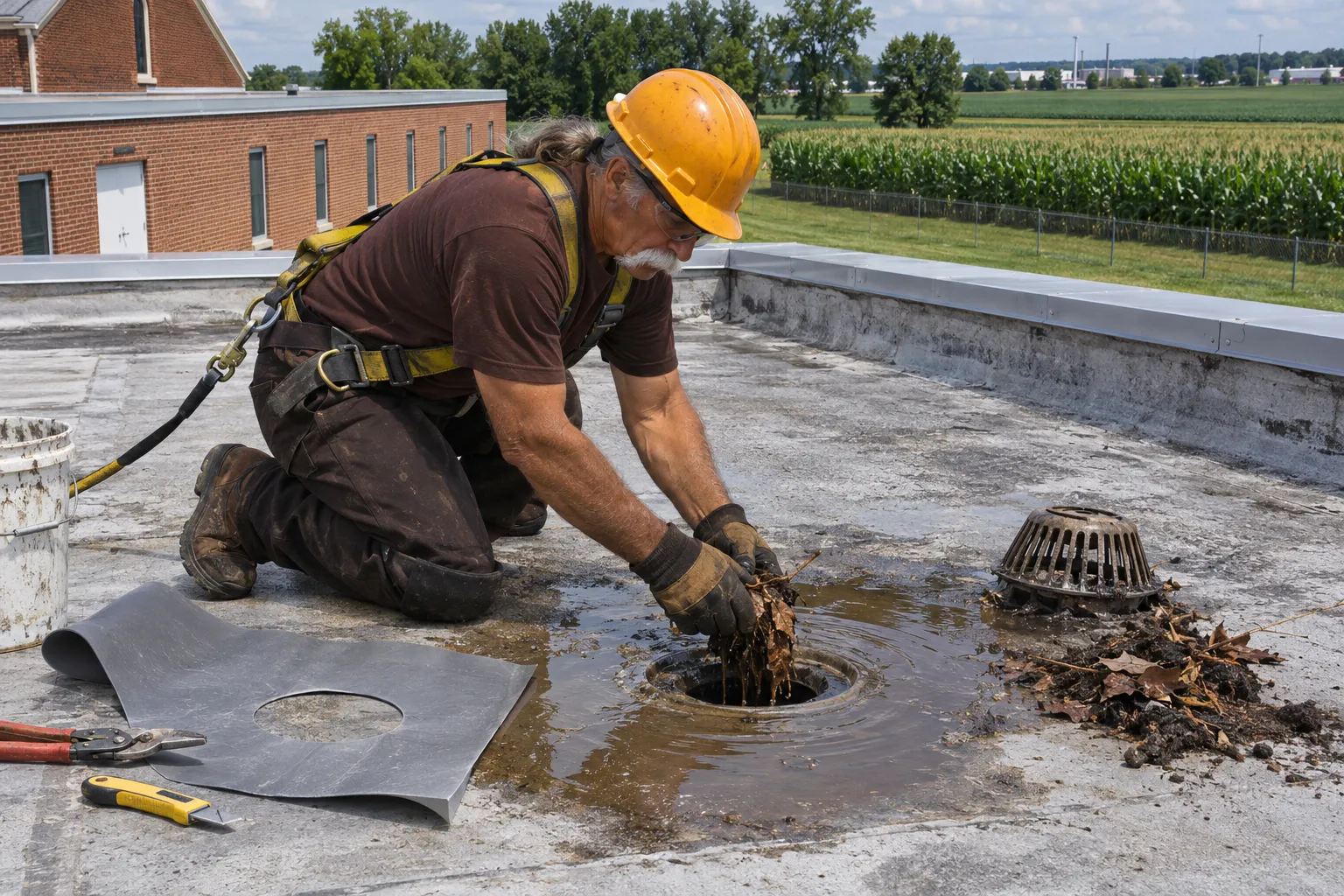
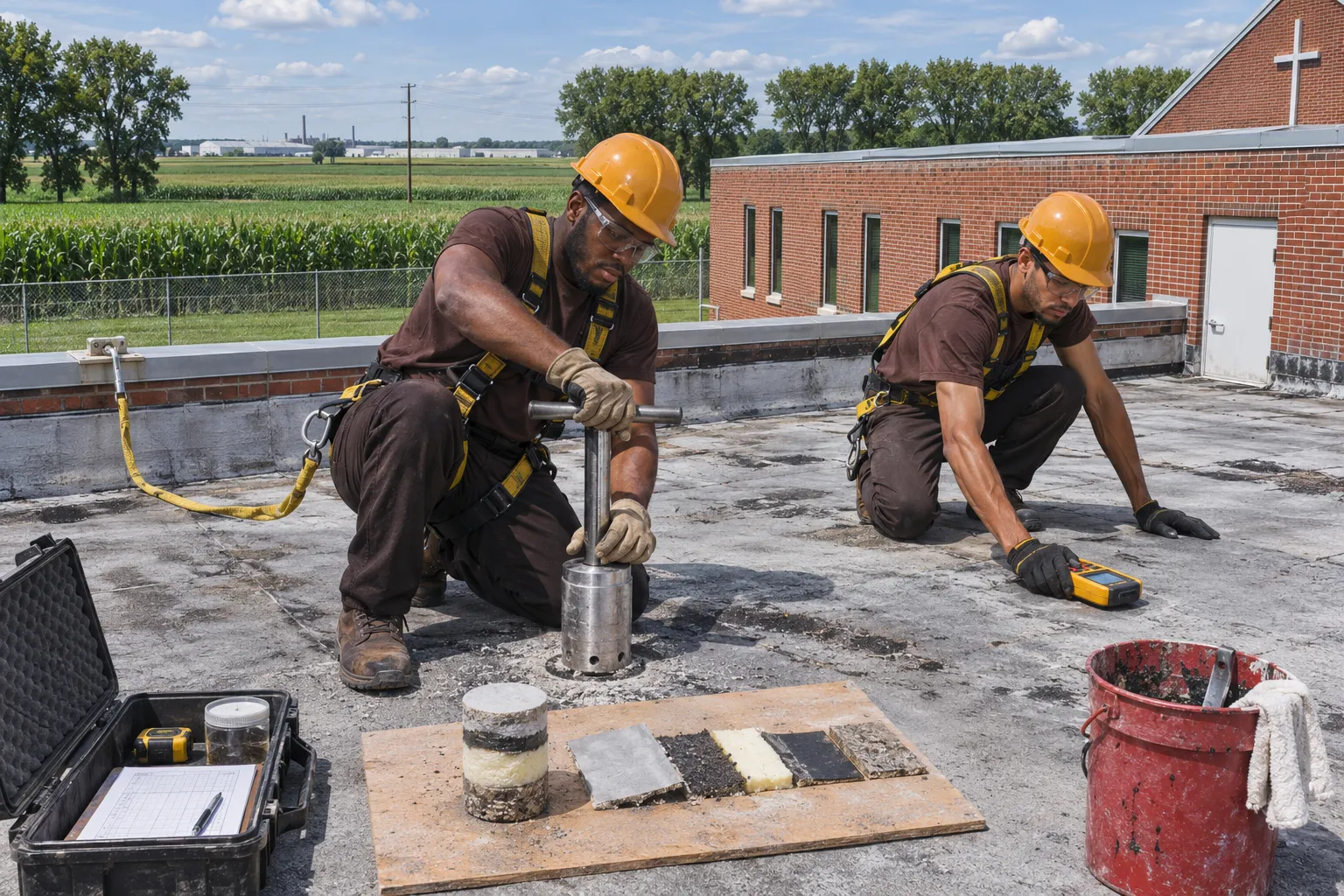
As a Kokomo flat roof repair contractor, we fix membrane seams, drains, blisters, and wet spots on TPO, EPDM, and built-up commercial roofs.
Kokomo flat roof repair fits most roofs with a few bad details. Find the case closest to yours.
Patch the lap with matching membrane and check the field around it.
Lower or clear the drain, replace crushed insulation, and add a cricket to move water.
Cores show if moisture is trapped. Wet sections get cut out and replaced.
Brittle membrane, many layers, and wet cores across the roof point to replacement.
Flat roofs show trouble in a few predictable places. Here is what each sign tells us.
A ring of silt shows where water sat after the last rain. Long standing water wears seams and freezes into the laps.
When the drain body sits higher than the membrane around it, water collects in a ring instead of draining.
Edges of a seam that open into a small mouth let wind push rain under the sheet.
Blisters form when trapped moisture heats up in summer. Cutting one open shows whether the felt below is wet.
Brown rings growing after each rain mean water already passed through the insulation and deck.
Large flat roofs over racking reward quick, targeted repairs.
Closing the seam over a rack row stops water from landing on pallets that sit right under the deck.
Resetting a high drain and clearing its line ends the standing water that wears the membrane around it.
Repairs made early keep wet insulation to a few boards instead of a whole bay.
Sealed laps keep water out of the joints where winter ice would pry them wider.
Each roof type takes its own repair material.
Hot-air welded patches fuse new membrane to the old sheet after the surface is cleaned and prepared.
Rubber roofs get primer and seam tape or a cover strip, rolled down to bond with the existing sheet.
Asphalt-based roofs get compatible ply patches set in mastic or torch-applied cap sheet where allowed.
Clamping rings are reset, strainers replaced, and the membrane re-flashed into the drain bowl.
Call and tell us which part of the roof holds water. We will check the drain and seams there first.
(463) 466-9764Call UsFlat roof work follows the water: from where it pools or drips to where it gets in.
Meter readings across the field and cores at the high readings show where insulation is wet and how far it spreads.
High drains, crushed boards, or a sagging deck each need a different fix, so the cause gets named before the repair.
Wet insulation comes out, new boards go in, and matching membrane is welded or bonded over the area.
Drains, curbs, and laps around the repair get re-flashed so the new section ties in tight.
Flat roof jobs often lead into these.
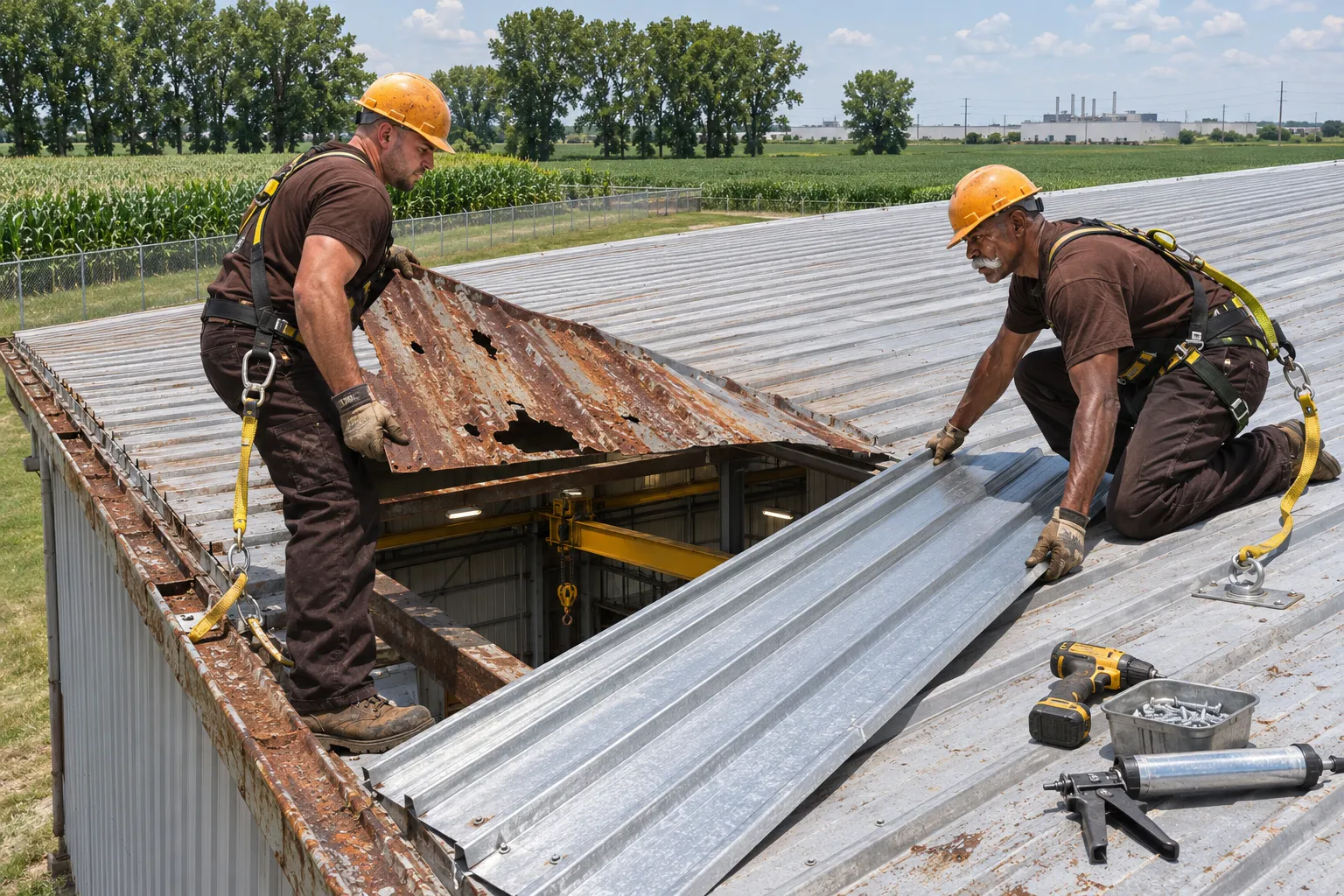
Screws, laps, rusted panels, and flashing on metal roofs get replaced or sealed one detail at a time.
Typical Repairs
Interior stains and drips get traced to the roof opening before anything is patched.
Typical Repairs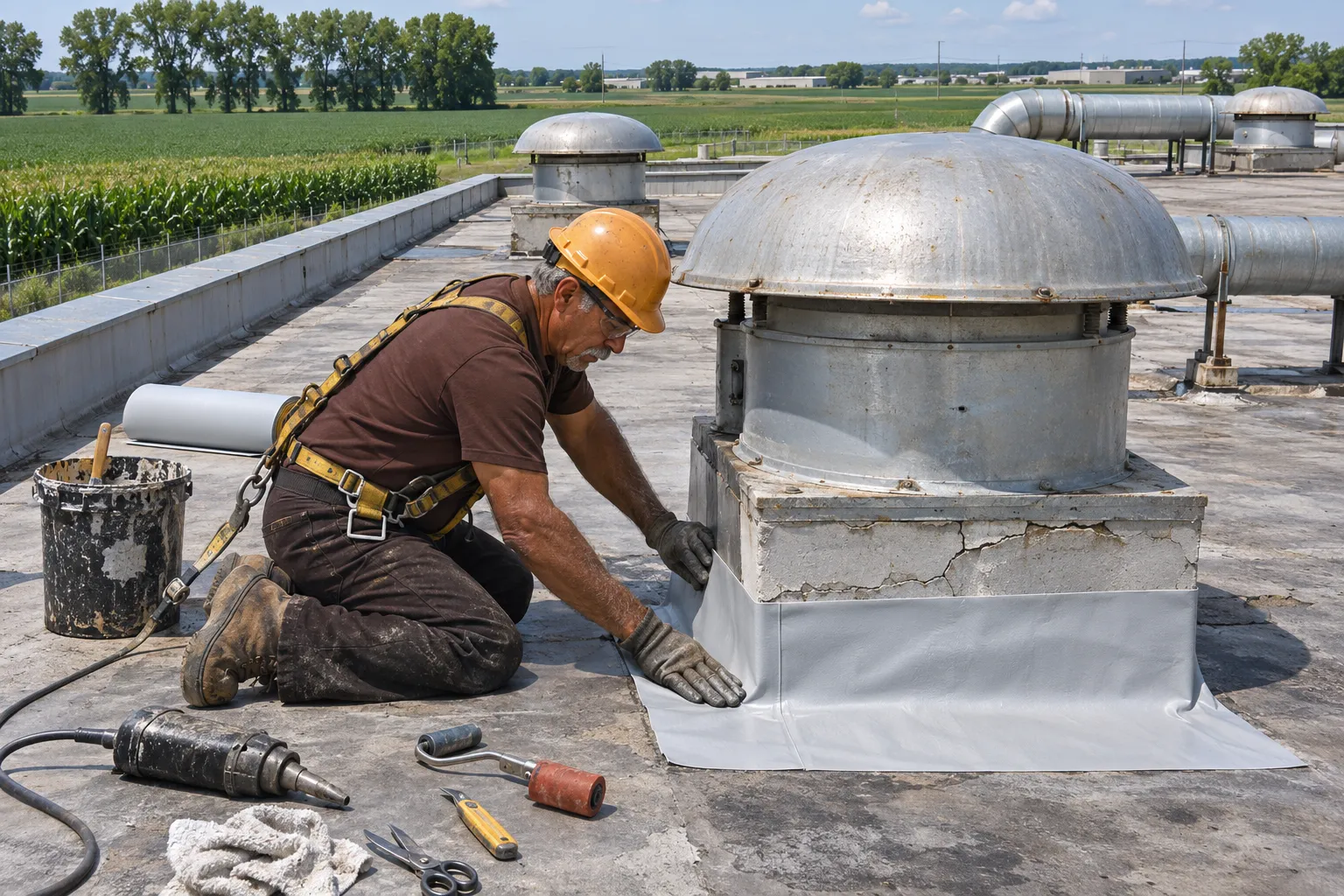
Fans, stacks, curbs, and long drain lines on plant roofs get repaired around the production schedule.
Typical RepairsWhat owners ask before booking a flat roof repair.
The size of the wet area, the roof system, how many drains and curbs are involved, and access to the roof. Older membranes that resist bonding can add labor. A free on-site estimate sets the price.
First the cause gets found: a high drain, crushed insulation, or a low deck. Drains are lowered or cleared, boards replaced, and tapered crickets added to steer water.
Any time water stands around a drain. A clogged or high drain floods the membrane around it, so it gets fixed before patches nearby.
Usually, on a dry roof. A matching patch welded or bonded over a clean puncture holds as long as the insulation below stayed dry.
Small dry blisters can. Wet blisters mean trapped moisture, and the wet insulation under them has to come out.
Yes, with cold-weather materials and temporary dry-ins. Full welds and large cut-outs wait for dry, milder days.
Tell us where water stands or drips, and we will inspect the roof and send a repair scope.