Fewer Ceiling Tiles Replaced
Sealing the true opening stops new stains, so facility staff quit swapping tiles after every storm.


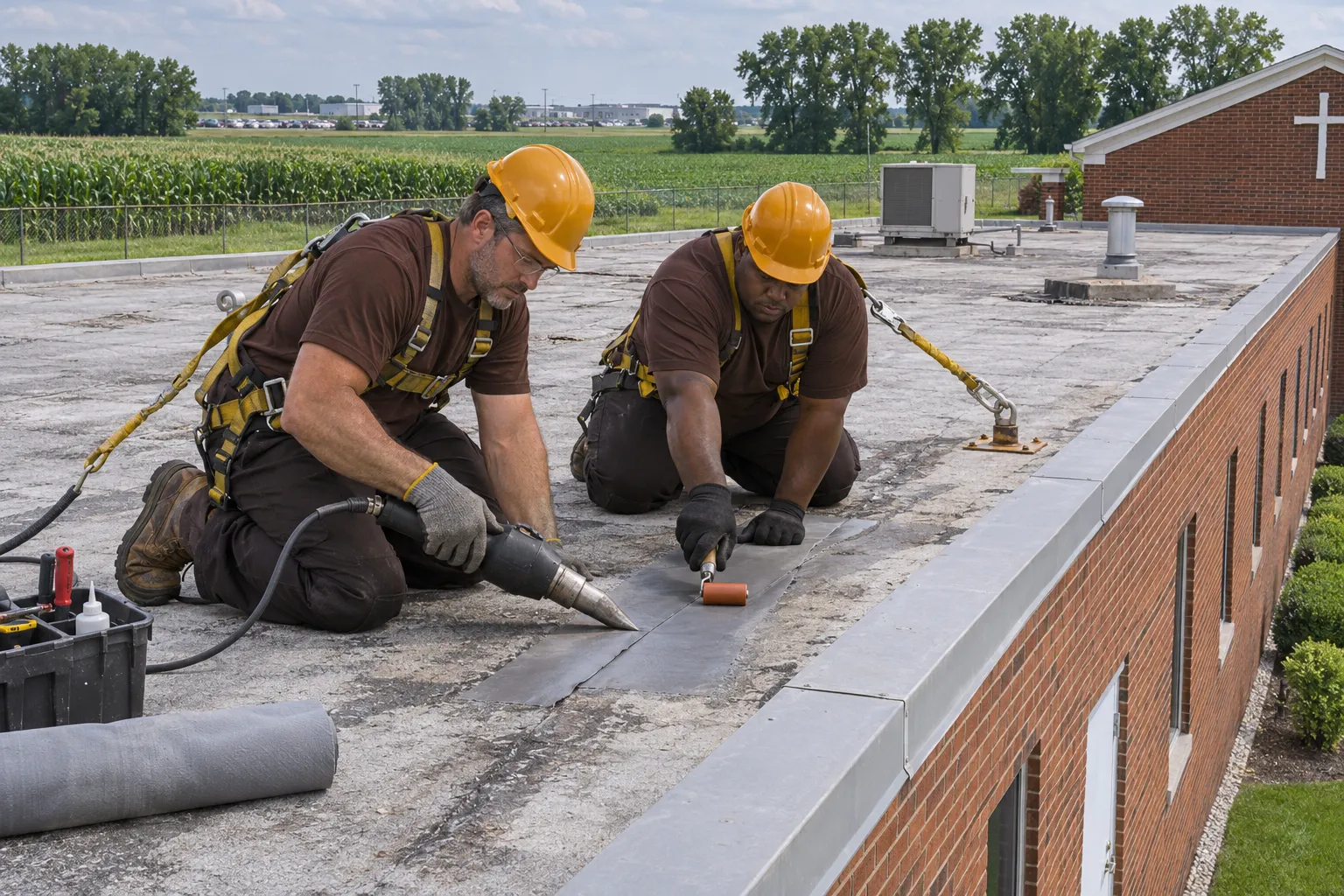
As a Marion commercial roof repair contractor, we start at the stained ceiling tile in your office or store and follow the water up to the opening.
Marion commercial roof repair in occupied buildings starts indoors, because the stain on a tile is the only clue tenants and staff can see.
Water rarely drops straight down. It runs along the steel deck flutes or between insulation boards, then falls where a joint or fastener lets it through.
So we mark the stain, note the weather that brought it, and look at what sits on the roof above. The search on the roof works upslope from that mark until the opening shows up.
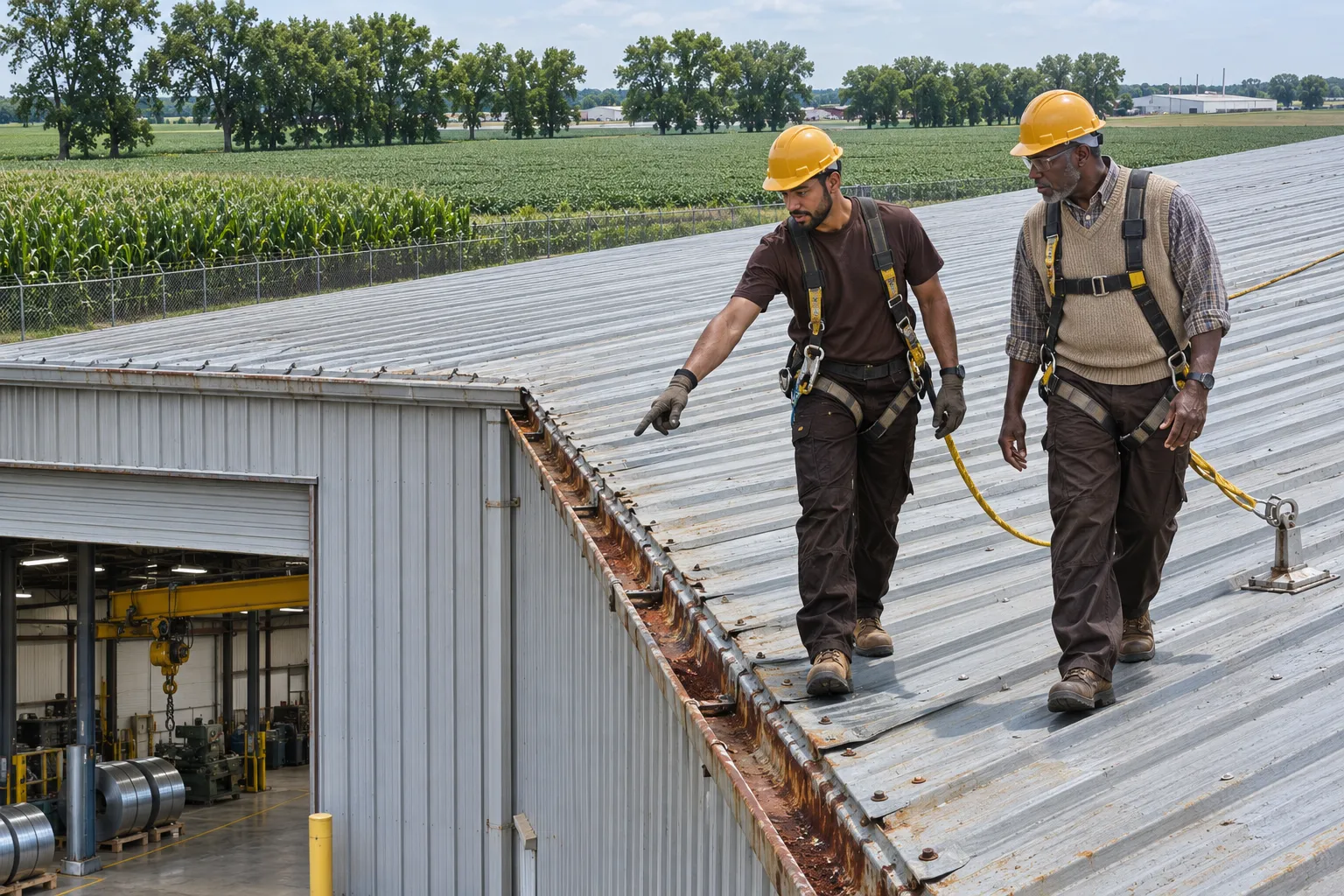
Offices, clinics, and stores give similar clues from inside. Here is what each one usually means up top.
Each storm widens the brown edge on the tile. The insulation above has already soaked through around the opening.
Water near an air diffuser often comes from the rooftop unit curb or duct penetration right above it.
Wet wall tops point to parapet flashing or coping joints on that side of the building.
Tiles bowing down are holding water. Clear the area below and call so the trace can start right away.
Leaks that appear only in downpours often trace to a drain that backs up and floods the seams nearby.
Occupied buildings need repairs that stay quiet for the people inside.
Sealing the true opening stops new stains, so facility staff quit swapping tiles after every storm.
Roof openings stay small and close each day, and loud steps can be timed around business hours.
Photos of the source and the repair give landlords something clear to share with tenants.
Catching the leak early keeps the wet area to a few boards around the seam or curb.
The fixes that close the openings we trace.
Matching membrane is welded or bonded over the open lap after the surface is cleaned.
Rooftop unit and vent curbs get new flashing and sealed corners.
Parapet flashing is re-terminated and coping joints sealed along the wet wall.
Soaked insulation around the opening comes out and dry boards go in before the patch.
Call and tell us which room. Move the desk or shelving, snap a photo of the tile, and we will start the trace above it.
(463) 466-9764Call UsThe visit goes inside first, then up to the roof.
We look at each stain, ask when it shows, and map it against the roof layout.
Seams, curbs, and drains between the stain and the high side of the roof get checked one by one.
A moisture reading or flood test on the suspect detail confirms the opening before repair.
The detail gets fixed, wet boards replaced, and photos sent showing what was found.
Marion is one of five towns we serve from Kokomo. Call us or send us a message if your building sits outside them.
Home base for flat, metal, and plant roof repairs.
Ponding, drains, and sagging spots on flat roofs.
Metal buildings with worn screws, eaves, and gutters.
Downtown blocks with parapets and internal gutters.
Storm and hail checks with a dated photo record.
What Marion owners and office managers ask first.
How long the trace takes, how many details need repair, how much wet insulation comes out, and access to the roof. Several stains can be traced in one visit. A free estimate sets the price after the inspection.
Yes. In buildings with several tenants, we trace each stain to its own opening and note which part of the roof it came from.
We can meet your facility contact or a tenant on site, then send photos and the scope to you by email.
Yes. Water travels along the deck and insulation joints, so the opening can sit many feet from the tile it stains.
Wait until the roof is fixed. Changing tiles first hides the clue that shows whether the repair worked.
Yes. Work over exam and treatment rooms is planned around patient hours, and roof openings stay small.
Point us to the stain and we will trace it to the roof, fix the opening, and send photos.